
Loading...
Serving Port St. Lucie, FL and surrounding areas. (772) 262-4458
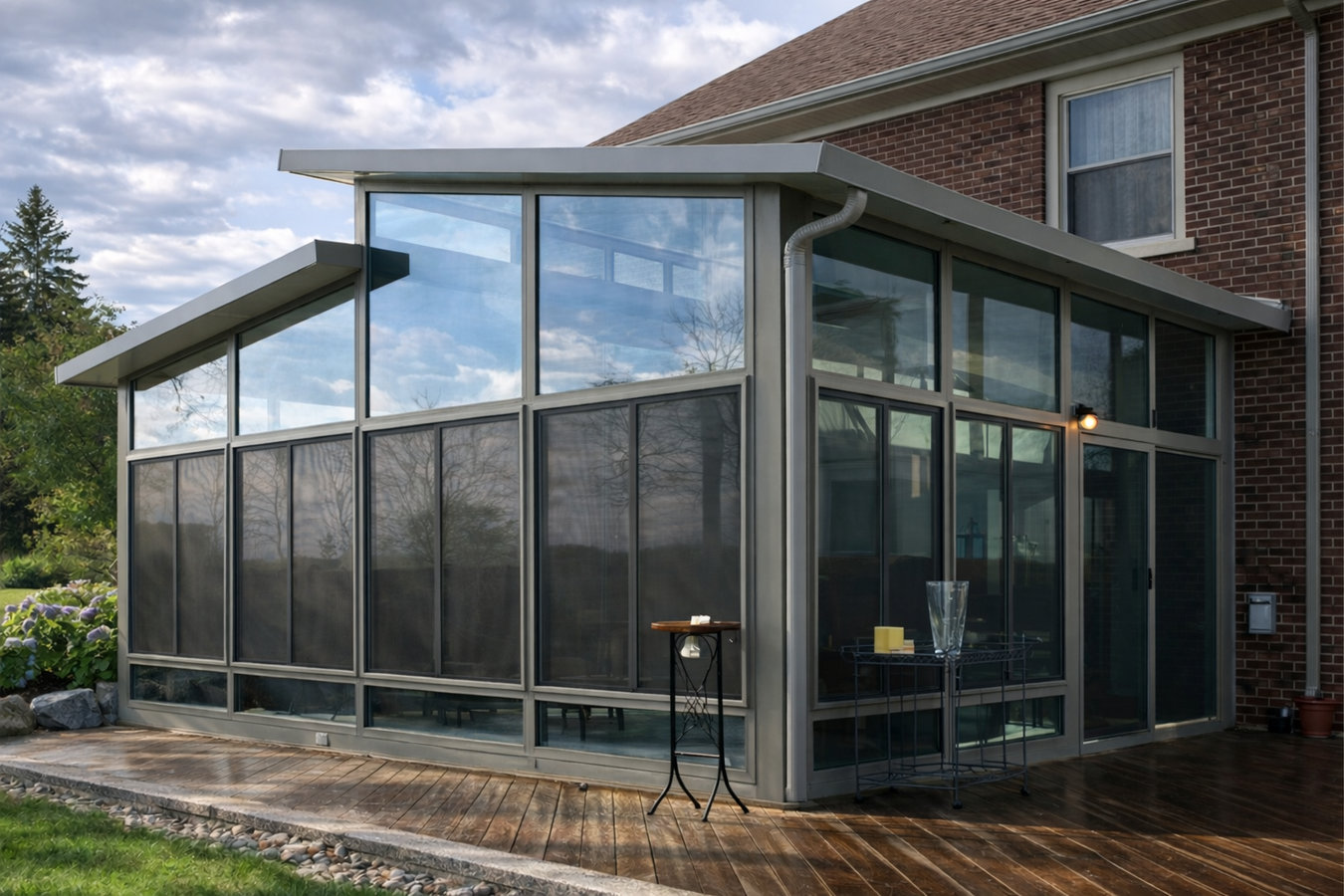
A full glass room that brings the outdoors in - without the bugs, rain, or summer heat - built and permitted for South Florida conditions.
Solarium installation in Port St. Lucie means adding a fully glass-enclosed room to your home, with glass on the roof and most or all of the walls, turning a patio or open slab into a year-round living space - most projects take one to three weeks of active construction once permits are in hand.
Unlike a screened lanai or a standard sunroom with solid walls, a solarium is designed to flood the room with natural light from every direction. Port St. Lucie homeowners who have an unused screened porch or a concrete slab sitting in the backyard often find a solarium is the most dramatic upgrade they can make without adding onto the house. The right glass choice is critical in this climate - low-e heat-blocking glass keeps the room usable even in July, while standard glass would turn it into an oven by mid-morning. If you are weighing your options, an enclosed patio room is a more budget-friendly path that also adds real livable square footage.
Port St. Lucie homes built between 1980 and 2005 often already have the concrete slab and roofline position that makes a solarium addition straightforward. A proper site assessment at the start of any project confirms whether your slab is solid enough to build on - in this area, sandy soil and high water tables mean that step cannot be skipped.
If your screened lanai or porch sits unused from May through October because the heat is unbearable, that space is not working for you. Port St. Lucie summers are long and intense - a solarium with proper heat-blocking glass and a cooling unit can turn that dead space into a room you actually want to be in year-round, not just during snowbird season.
If you have been searching for a quiet, light-filled space to work or pursue a hobby, no interior renovation delivers what a solarium does. The abundance of sunshine on the Treasure Coast makes a glass-enclosed room genuinely luminous even on overcast days - and it feels connected to the outdoors in a way no interior room can replicate.
If you have a concrete slab behind your home that collects leaves and the occasional lawn chair, it may already be a suitable base for a solarium addition. A contractor can assess whether it is structurally sound enough to build on - which can save you the cost of a new foundation and speed up the overall timeline.
If your current screen enclosure lets in rain during afternoon storms, tears in hurricane season, or simply cannot keep out the no-see-ums common along the Treasure Coast, a fully enclosed glass structure solves all of those problems at once. It is a permanent upgrade rather than a repeated repair bill.
Every solarium project starts with what you already have. We assess the existing slab or foundation, look at how the new structure will connect to your home's exterior wall, and work through any HOA requirements before a single drawing is made. For homeowners who want more shade and weather protection without full glass walls, we also install patio covers - a lower-cost option that still transforms how you use your outdoor space.
For homeowners who want the most design flexibility in their new space, our custom sunroom service goes room-by-room with layout, materials, and finishes selected specifically for how you live. We will walk you through both paths honestly so you can decide which one fits your home, your budget, and your goals.
Best for homeowners who already have a concrete patio in good condition - we build the aluminum or steel frame and install glass panels on walls and roof without pouring a new foundation.
Suited for homeowners whose existing slab is too old, too thin, or in poor condition - a new concrete footing is poured and allowed to cure before framing begins.
Ideal for homeowners who want the room usable in South Florida's summer - a wall-mounted mini-split or ceiling fans are sized and installed for the specific square footage.
Designed for homeowners in Port St. Lucie planned communities who need architectural drawings, specific frame colors, and written HOA approval before the county permit can be submitted.
Port St. Lucie sits in a climate zone where summer temperatures regularly exceed 90 degrees and the sun angle is steep for most of the year. Without heat-blocking glass - often called low-e glass - a solarium built here becomes unusable by late spring. The Florida Building Code adds another layer of requirements that most out-of-state contractors underestimate: because St. Lucie County falls within Florida's wind-borne debris region, all glass and framing must be engineered to withstand the wind speeds this area has seen. The Florida Building Commission sets those standards for good reason, and a permitted structure built to them is one your homeowner's insurance will recognize when a storm rolls in. Sandy, moisture-prone soil near the St. Lucie River and in low-lying neighborhoods also means a foundation check is not optional - it is how you avoid cracked frames and leaks a few years down the road.
We work throughout Port St. Lucie, including the master-planned neighborhoods of Tradition where HOA approval comes before the county permit, and communities near Hobe Sound where older homes often have a well-positioned slab that is ready to build on. Wherever your home sits in the area, we know the local permit office, the common HOA requirements, and what the soil conditions mean for your foundation plan.
When you reach out, we ask a few questions before quoting anything - how you plan to use the space, whether you have an existing slab, and whether your neighborhood has an HOA. We reply within one business day and can usually schedule an on-site visit within the same week.
We visit your home to measure the space, check the condition of your foundation or patio, and look at how the new structure will connect to your home's exterior wall. You receive a written estimate within a few days - broken down by line item so you know exactly what you are paying for.
Before any work begins, we submit permit applications to St. Lucie County on your behalf. If your neighborhood has an HOA, we provide the drawings and documentation they need for their review. This phase typically takes one to three weeks - and you do not have to chase a single piece of paperwork.
The frame goes up first, then the glass panels in walls and roof, then electrical and cooling connections if included. Once construction wraps, a county inspector visits to confirm the work meets code. We do a final walkthrough with you and hand you the permit closeout documents to keep with your home records.
No pressure, no obligation. We visit your home, assess your slab, and give you a written quote you can compare with anyone else.
St. Lucie County requires a permit for every permanent addition, and we handle the entire application, drawings, and inspection scheduling on your behalf. A finished solarium with clean permits is a legal, insurable, sale-ready asset - one without permits is a liability that can surface at the worst possible time.
We specify heat-blocking low-e glass for every solarium we install in Port St. Lucie because standard glass makes the room unusable in summer. The right glass choice is the difference between a room you use in July and one you avoid until November. We can explain exactly what we recommend and why before you commit to anything.
St. Lucie County is in a designated wind-borne debris region. Every frame, glass panel, and connection point we install is rated for the wind speeds this area has recorded. That is not just a compliance checkbox - it is what keeps the structure standing and your insurance valid after a storm.
We have worked in HOA-governed communities throughout Port St. Lucie, including Tradition and PGA Village. We know what documentation most associations require, how to prepare the architectural drawings they want to see, and how to move the process along without back-and-forth delays that add weeks to your timeline.
Every one of these points comes back to the same thing: you deserve a solarium that works the way you expect, holds up to Florida weather, and does not create paperwork problems down the road. That is the standard we hold every project to - from the first site visit to the day we hand you the permit closeout documents. You can also verify any Florida contractor's license through the Florida Department of Business and Professional Regulation before you sign anything.
A solid-roof patio cover gives you shade and rain protection without the full glass enclosure - a practical first step for many Port St. Lucie backyards.
Learn MoreDesign every detail of your new room from the ground up - layout, materials, windows, and finishes chosen specifically for how you live.
Learn MorePermit season fills up fast - lock in your build date before the winter rush hits and get a written quote with no obligation.